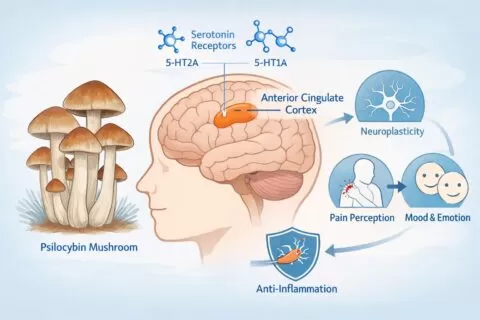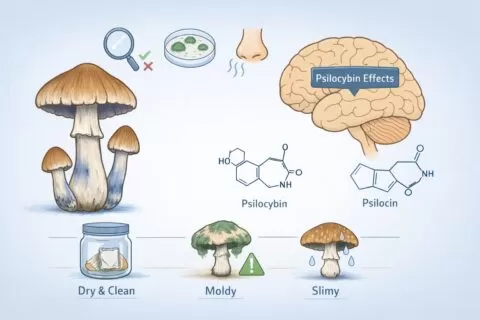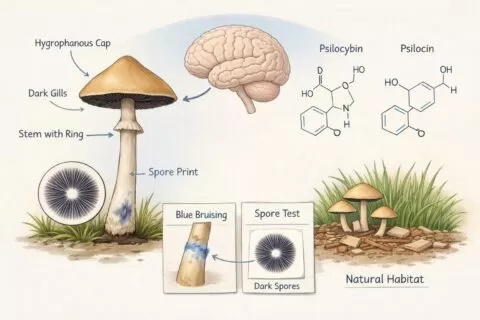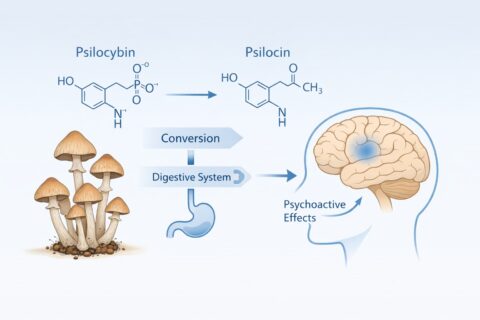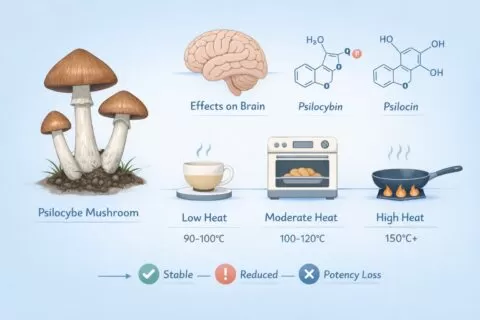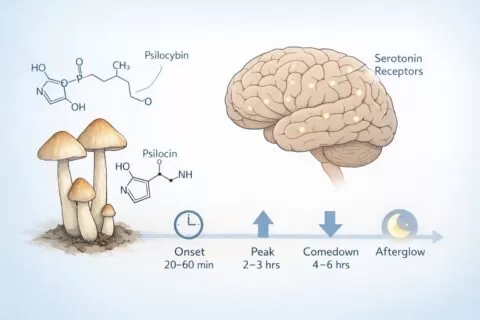
Magic mushrooms might look small and simple, but they’ve sparked curiosity for generations. These mushrooms grow in the wild and are known for a special compound called psilocybin, which changes how people feel and see the world. When the body processes psilocybin, it turns into psilocin, which causes those strong effects.
The most common types of magic mushrooms come from a group of fungi called Psilocybe. But they’re not the only ones. Other mushrooms from groups like Panaeolus, Gymnopilus, and Conocybe can also have psilocybin. These mushrooms don’t grow just in one place. In fact, they’re found on every continent except Antarctica.
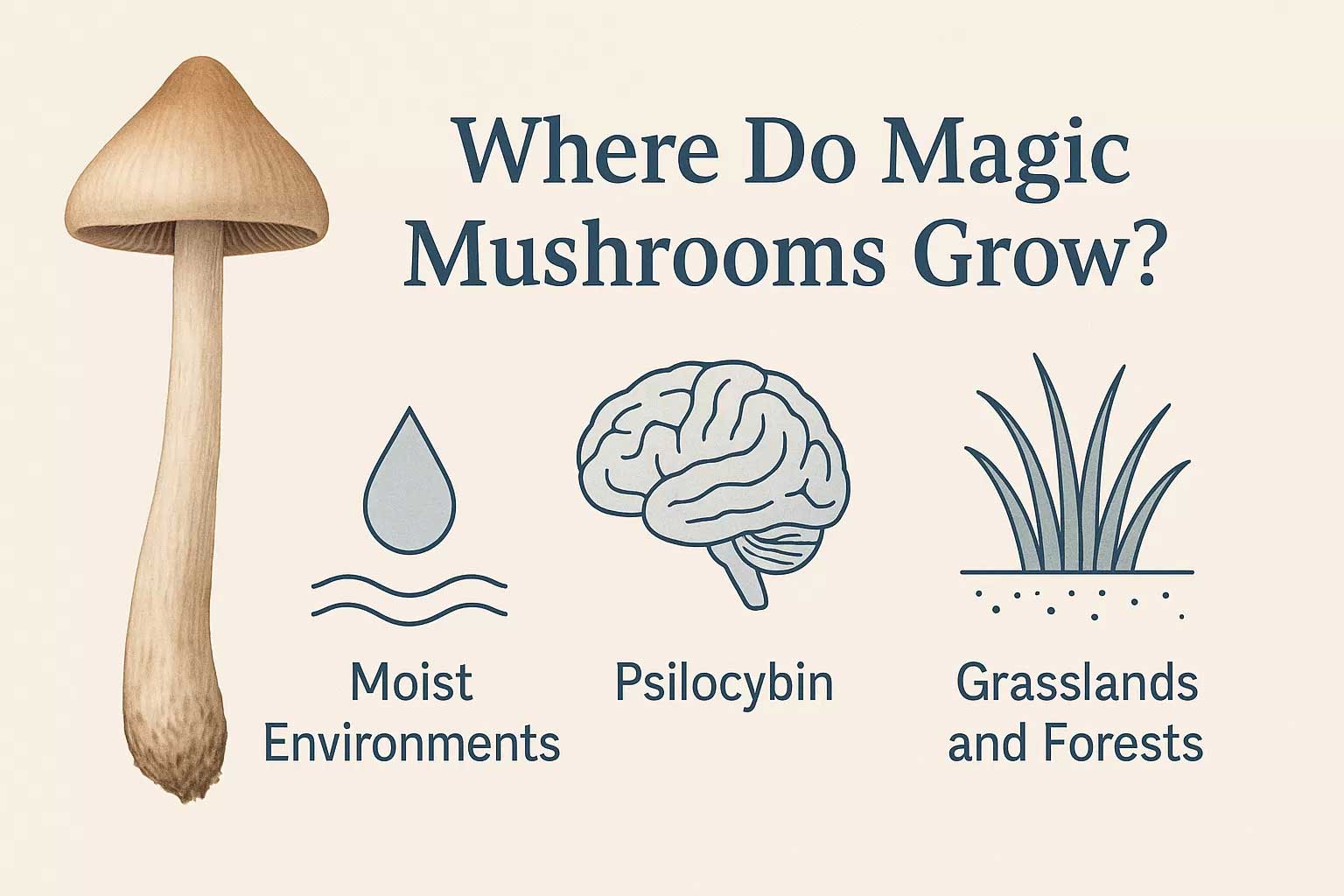
Magic mushrooms grow in many different climates, but they especially like warm, humid places. These areas usually have the most species.
In tropical and subtropical regions, such as Mexico, Central America, and Southeast Asia, the climate is perfect for mushrooms like Psilocybe cubensis, often called the “Golden Teacher.” This is one of the most well-known and commonly grown types because it handles different conditions well.
In temperate regions, where the weather is cooler and wetter, mushrooms grow during late summer and fall. One well-known species here is Psilocybe semilanceata, or the “Liberty Cap.” It’s found in Europe, North America, and parts of Australia and New Zealand, making it one of the most widespread magic mushrooms in the world.
Mexico has the highest number of different Psilocybe species, and it’s also a place with a long history of cultural use. In the Pacific Northwest of the U.S. and Canada, people often find wood-loving mushrooms like Psilocybe cyanescens (called the “Wavy Cap”) and Psilocybe allenii, especially in areas with lots of mulch or forest debris.
Mushrooms are not plants. They are fungi, and they feed on dead or decaying materials. This helps explain where they grow best.
Some species, like Psilocybe cubensis, grow on manure from cows, horses, or other animals that eat grass. These mushrooms are often found in pastures, meadows, and open fields.
Other mushrooms grow on rotting wood, mulch, dead leaves, and even wood chips. These types are usually found in parks, gardens, or forests. Mushrooms like Psilocybe cyanescens, Psilocybe azurescens, and Psilocybe allenii grow this way and are common in cooler, coastal areas.
Some mushrooms grow in grassy or mossy areas, especially where the ground stays wet and full of nutrients. Psilocybe semilanceata is a good example. It grows in grassy meadows and lawns, but not directly on dung.
Magic mushrooms need humidity and the right temperature to grow. That’s why they appear more often after rainfall or in areas that stay damp.
| Psilocybe cubensis (Golden Teacher) | Psilocybe semilanceata (Liberty Cap) | Psilocybe cyanescens (Wavy Cap) | |
| Where It Grows | In pastures and fields, often on cow or horse dung. | In meadows, lawns, and grassy hills, but not directly on dung. | In wood chips, mulch, and other dead plant material. |
| Climate | Tropical and subtropical areas around the world. | Cooler areas across Europe, North America, and Asia. | Pacific Northwest, Western Europe, and parts of the UK. |
| Notes | Often grown indoors because it’s easy to cultivate under the right conditions. | One of the most widely found magic mushrooms in the world. | Often found in landscaped areas like city parks or garden beds. |
Wild mushrooms grow in nature, but they can be hard to identify. Some deadly mushrooms, like Galerina, look almost the same as psilocybin mushrooms. This makes foraging very risky. Even experienced mushroom hunters can make dangerous mistakes.
Some species, like P. cubensis, are often grown indoors under controlled conditions. People use special materials like sterilized grain, coco coir, and vermiculite to create the right environment. They also control temperature and humidity using equipment. Indoor setups usually keep humidity between 90–95%, with temperatures around 20–25°C (68–77°F) during fruiting.
Magic mushrooms are important not just for their effects but also for their role in nature. They are decomposers, which means they help break down dead plants and animals. This returns nutrients to the soil and keeps ecosystems healthy. Whether in a forest, a pasture, or a city garden, these mushrooms help recycle life.
Magic mushrooms grow in many places around the world. They like warm, damp, and nutrient-rich environments. They can be found in fields, forests, or even city parks. But despite their natural beauty and mystery, it’s important to remember that psilocybin mushrooms are illegal to possess, grow, or use in most places unless you have special government approval.