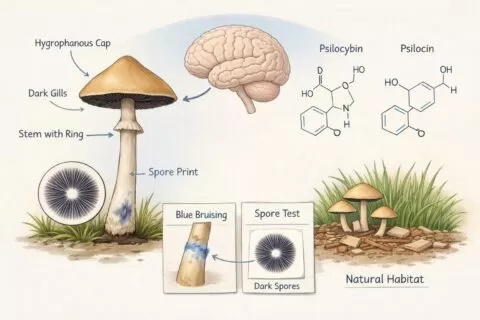
Wild “magic mushrooms” are fungi that naturally contain a chemical called psilocybin. This chemical can affect the brain, so it’s important to know what these mushrooms look like, not to use them, but to understand them, and avoid mistaking them for something dangerous. Many mushrooms that grow in the wild may look harmless, but some can be deadly. Here’s what to know about identifying wild magic mushrooms and how to spot their look-alikes.
Most magic mushrooms come from a group called Psilocybe. There are over 200 species, but many of them have similar features. People often call them “LBMs,” which stands for Little Brown Mushrooms. These mushrooms might look boring, but it’s important to know how to spot magic mushrooms and tell them apart from poisonous ones.
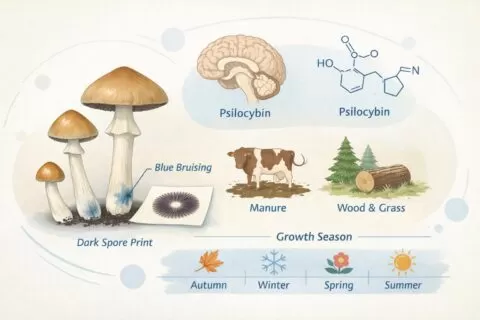
One of the biggest clues is how the mushroom reacts when you touch or damage it. Psilocybin mushrooms often turn blue or blue-green where they are pressed or cut. This is called “blue bruising.” It happens because of a reaction in the mushroom’s chemicals. But this test isn’t perfect. Some mushrooms that are toxic also bruise blue, and not all magic mushrooms do it clearly.
Mushroom hunters often take what’s called a “spore print.” This means placing the mushroom cap on paper or glass for several hours. As the spores fall out, they leave a print that shows their color. For most magic mushrooms, the spore print is a dark purplish-brown or nearly black. If the print is rusty brown or white, the mushroom may be a dangerous look-alike.
The top of the mushroom, called the cap, often changes color depending on how wet or dry it is. When wet, it may look shiny, dark brown, or a little see-through. When dry, the color often fades to a light tan or yellowish color. Some of these mushrooms also have a thin skin on the cap that can be peeled off, like a film.
Even though there are many species, most people know how to identify three in particular. These are the ones most commonly found or talked about.
This is one of the largest and most well-known types. It has a golden-brown cap and a thick, white stem that bruises blue very easily. It grows in warm places, usually on cow or horse manure in tropical or subtropical regions. It’s rarely found in colder climates.
This mushroom is small, with a pointy, cone-shaped cap and a tiny bump at the top, like a nipple. The stem is thin and often wavy. It doesn’t grow on manure but prefers grassy fields and meadows, especially those with lots of sheep or cows. It’s more common in cooler areas.
This one has a shiny, caramel-colored cap that becomes wavy as it gets older. It often grows in wood chips, mulch, or garden beds, especially in cooler, wetter places like the Pacific Northwest. It also bruises blue and can be mistaken for other mushrooms that grow in similar environments.
Where can you find magic mushrooms? They’re saprophytic, which means they feed on decaying material. You won’t find them on healthy plants. Instead, look in areas with rotting wood, rich mulch, or animal manure.
In most areas, magic mushrooms grow during the fall, especially after the first big rains. They need wet weather and cooler temperatures. In warmer places, some may also grow in spring or even year-round in the right conditions.
Here’s the most important thing to understand: many mushrooms that look like magic mushrooms are actually poisonous. Some can cause serious harm, and a few can even kill you. Here are a few to watch out for:
This mushroom can look almost exactly like Psilocybe cyanescens. But it contains deadly toxins called amatoxins, the same ones found in the Death Cap mushroom. A single mistake with this mushroom can lead to liver failure. Its spore print is rusty orange, which is different from the dark purple of magic mushrooms.
These mushrooms sometimes bruise blue, just like magic mushrooms, but they contain muscarine, a toxin that can cause sweating, stomach problems, and, in high amounts, even stop your breathing. They’re especially tricky because their color changes can fool people.
These are often confused with Psilocybe cubensis when found in grassy areas. They may look harmless, but they release green spores and can cause painful stomach cramps, vomiting, and diarrhea.
The takeaway: just because a mushroom looks familiar doesn’t mean it’s safe. When it comes to wild mushrooms, looks can be deadly.
In many places, simply picking a psilocybin mushroom, even if you don’t eat it, is against the law. That’s because psilocybin is a controlled substance in many countries, including the United States and Canada. Some states and cities have passed local rules to reduce penalties or allow supervised medical use, but federal laws still apply.
If you’re unsure about the rules where you live, it’s best not to touch or collect wild mushrooms at all. Legal trouble isn’t worth the risk.
Even people who are experienced foragers follow strict rules when collecting wild mushrooms. The most important thing is: when in doubt, throw it out. No mushroom is worth risking your life over.
Here are some good habits mushroom lovers follow:
And again, if you’re not 100% sure what you’re looking at, it’s better to leave it alone.
Understanding what magic mushrooms look like can be fascinating, especially for people who enjoy learning about nature. But identification is not easy. It takes years of experience, expert guidance, and sometimes even lab testing to be certain. That’s why many experts say the safest way to enjoy mushrooms is with your eyes, not your hands.
If you’re curious, focus on learning from trustworthy books, local mushroom clubs, or educational walks led by professionals. Wild mushrooms are beautiful and mysterious, but they also demand respect.

Are You 18 Or Over?
By clicking 'Continue', you confirm that you are over 18 years old. By using this website, you agree to our terms of service.