Magic mushrooms, also known as psilocybin mushrooms, may seem like any other mushroom growing in the wild. But their unique features, and the danger of confusing them with toxic look-alikes, make it important to know what you’re looking at. Whether you’re just curious or want to understand what sets them apart, here’s what you need to know.
Many types of magic mushrooms come from the Psilocybe family. While each species can look different, they often share three key features. These traits aren’t foolproof on their own, but they’re a starting point.
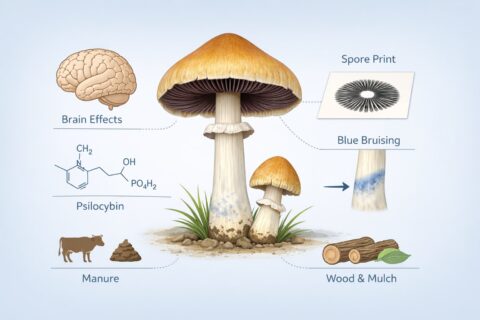
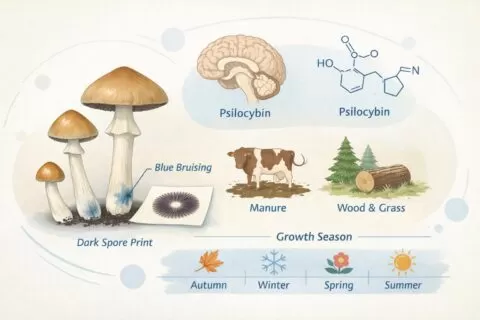
This is probably the most famous sign. When you press or damage the stem or cap of many psilocybin mushrooms, the spot will turn bluish or purplish. This color change is due to a chemical reaction when the mushroom’s compounds mix with oxygen.
Spores are tiny mushroom seeds that drop from under the cap. If you leave the cap on a piece of white paper for a few hours, you’ll often see a dark purplish-brown to almost black print. This spore color is common among psilocybin mushrooms.
Some mushrooms in this group have a thin, jelly-like layer on the cap. This layer can be peeled off when the mushroom is fresh or wet. It’s called a pellicle, and it’s a subtle but useful clue.
To spot magic mushrooms, it helps to know a bit of mushroom anatomy. Here’s a quick breakdown of what to look for:
Usually cone-shaped or rounded when young, and may flatten as the mushroom grows. The color can range from yellowish to reddish-brown. Many are “hygrophanous,” meaning the cap changes color as it dries out, often starting dark and fading to a pale beige.
These are the thin, blade-like parts under the cap. In young mushrooms, the gills are light gray. As the spores mature, they turn a deeper purple or brown.
Usually slender and pale, ranging from white to tan. You might see blue bruising here if it’s been handled.
Some species have a small ring around the stem. This is leftover tissue from when the mushroom was young, and the gills were covered. Not all mushrooms have this, but it’s another detail to check
There are hundreds of species of magic mushrooms around the world. Here are three of the most well-known:
This is one of the most common and considered the best magic mushrooms, especially for indoor growers.
These are often found in Europe, Canada, and the Pacific Northwest.
These are common in cities, parks, and garden beds where wood chips are used.
This might be the most important part. Some poisonous mushrooms look very similar to magic mushrooms. Picking or eating the wrong one can lead to serious illness, or worse.
The Galerina marginata can grow in the same wood-chip habitats as Psilocybe cyanescens. But it contains deadly toxins called amatoxins.
Some mushrooms in this group contain muscarine, a toxic chemical.
Magic mushrooms aren’t everywhere. They usually grow naturally in specific places depending on the type.
Some, like Psilocybe cubensis, grow well in cow or horse manure. These mushrooms are most common in warm, tropical, or subtropical areas like parts of the southern U.S., Mexico, or Southeast Asia.
Others, like Psilocybe cyanescens, prefer rotting wood, bark chips, or wet garden mulch. These types are often found in the Pacific Northwest, British Columbia, and parts of Europe. Moist weather helps them grow.
Magic mushrooms may look simple, but identifying them is far from easy. They come in many shapes and sizes, and small details, like spore color or cap shape, make a big difference. Even experienced mushroom hunters can make mistakes, which is why it’s so important to be careful.
If you’re learning about mushrooms out of curiosity or interest in nature, focusing on the science and structure is a safe place to start. Always remember: mushrooms can be beautiful, but they deserve respect. Some are fascinating; others are dangerous. Knowing the difference could save a life.

Are You 18 Or Over?
By clicking 'Continue', you confirm that you are over 18 years old. By using this website, you agree to our terms of service.