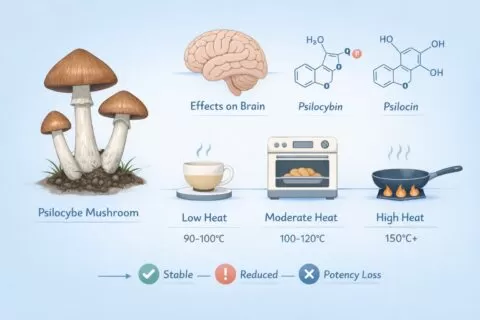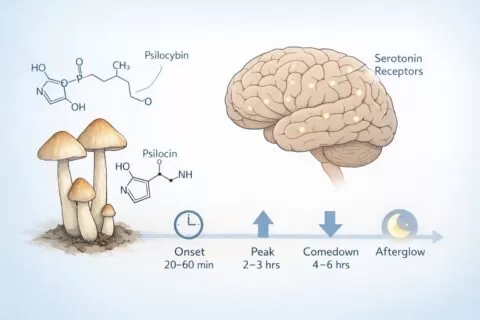
Over the past few years, interest in “magic mushrooms” has grown in both science and pop culture. These mushrooms contain a substance called psilocybin, which is being studied by scientists for how it affects the brain.
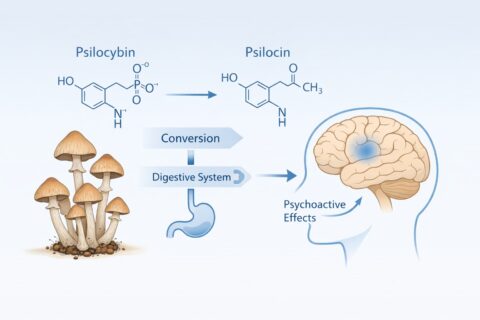
When someone eats a magic mushroom, their body quickly turns psilocybin into psilocin, the chemical that causes changes in how the brain works. Psilocin doesn’t just create strange or intense experiences. It also changes how the brain connects and communicates.
Scientists are now looking at how this temporary shift could lead to long-term changes, especially for people dealing with depression or anxiety.
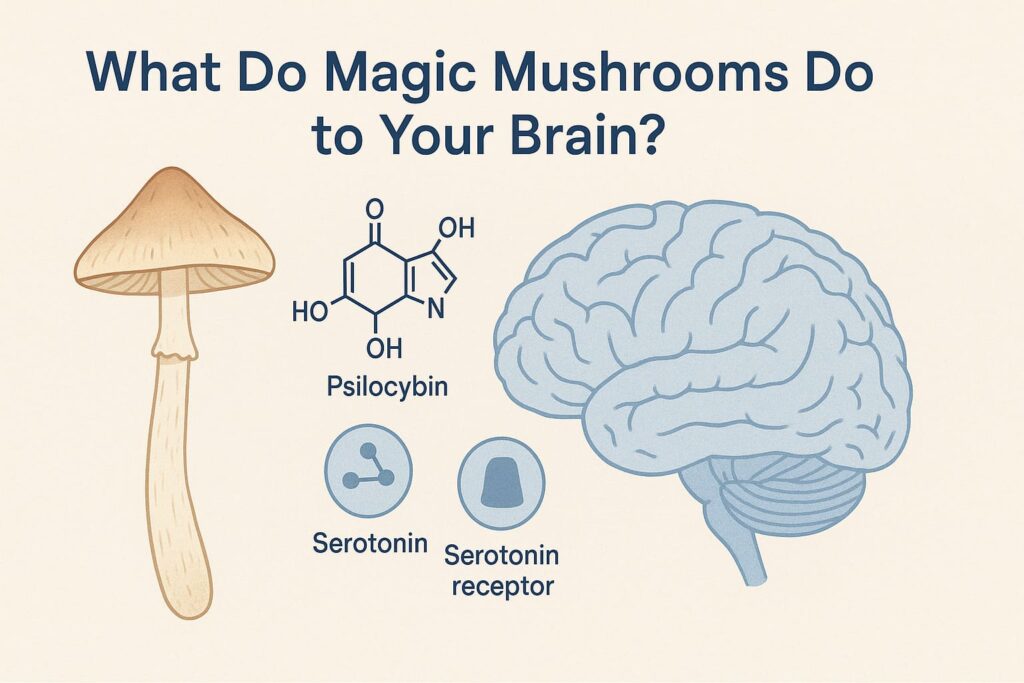
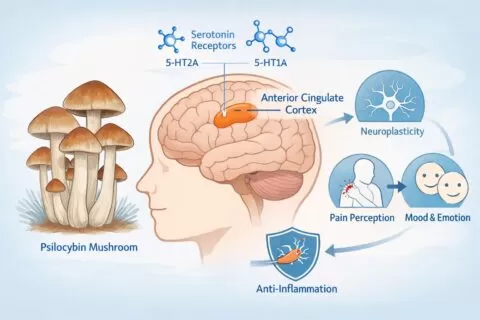
Psilocin works by acting like a brain chemical called serotonin, which helps control mood, thoughts, and how we see the world. Psilocin sticks to special spots in the brain called serotonin receptors.
One type of receptor, called 5-HT2A, plays a big role in how people think and feel. These receptors are found in important brain areas, including the prefrontal cortex, which helps with decision-making, mood, and awareness.
When psilocin activates these spots, it sends new signals that change the brain’s usual balance. This shift can lead to powerful changes in how a person feels and thinks, at least for a short time.
One major part of the brain affected by psilocybin is the Default Mode Network, or DMN. This is a group of brain areas that work together when you’re thinking about yourself, your past, or your future. It’s active when your mind wanders or when you’re just resting.
Scientists think the DMN is tied to your sense of identity, your “ego.” When someone takes psilocybin, the DMN becomes much less active, and its usual rhythm is disrupted. This may be why people describe a sense of “ego loss” or feel like they are part of something bigger than themselves.
Brain scans also show that psilocybin changes how different parts of the brain talk to each other. Areas that don’t normally connect, like those that control vision, emotions, and memory, start working together. This is called increased connectivity.
These new patterns may explain why some people report seeing sounds or feeling deep emotions in response to ordinary things. Scientists call this a hyper-connected state, and they believe it helps the brain break out of old, rigid thought loops.
One theory to explain this is the REBUS model, short for “Relaxed Beliefs Under Psychedelics.” It suggests that psilocybin allows the brain to let go of strong beliefs or assumptions. Instead of filtering everything through past experiences, the brain becomes more open to new ideas and ways of thinking.
What makes psilocybin especially interesting is that the changes in the brain might last beyond the experience itself. In animal studies, researchers saw that psilocybin could make neurons grow new connections. These are called dendritic spines, tiny parts of brain cells that help send and receive messages. After just one dose, some animals showed more of these connections in the prefrontal cortex, and the effects lasted for weeks.
This process is called neuroplasticity, and it means the brain is more flexible and able to change. Scientists believe that after a psilocybin experience, the brain may go through a short period where it’s easier to build new habits or let go of harmful thought patterns. This is especially interesting for therapists who work with people struggling with depression, anxiety, PTSD, or addiction.
Many mental health problems, like depression, are linked to brain circuits that have become stuck in negative loops. In people with treatment-resistant depression, usual methods like therapy or medication often don’t work.
Psilocybin seems to “reset” the brain by quieting the DMN and helping it form new connections. This may explain why people in clinical trials report feeling better weeks after a session.
Some studies even show that psilocybin can reduce the connection between the DMN and the hippocampus, the part of the brain that deals with memory and self-perception. This change might help people stop overthinking or obsessing over the past, a common problem in depression.
Everyone’s experience with psilocybin is different, but there are common effects seen in research settings. Some people feel deep happiness, peace, or a strong sense of connection to nature or other people. Others describe it as a powerful spiritual or emotional event. People may also become more thoughtful and reflective during the experience.
However, not all experiences are pleasant. Some people may feel fear, anxiety, or confusion, often called a “bad trip.” These reactions are more likely if someone is in an unsafe or stressful environment. Scientists have found that a person’s mindset and surroundings, called “set and setting”, play a big role in how the experience turns out.
There are also short-term physical effects, like higher heart rate, nausea, or dizziness. These usually go away after a few hours. In rare cases, people can experience HPPD (Hallucinogen-Persisting Perception Disorder), which causes flashbacks or changes in vision days or weeks later.
Scientists are still learning how psilocybin works and who it might help the most. While early studies are promising, more research is needed to figure out the right dose, how often it should be used, and what kinds of therapy work best with it. Large clinical trials are now underway to answer these questions.
So far, the research shows that psilocybin doesn’t just change how people feel in the moment; it may help the brain become more flexible, less stuck, and more open to healing. This has the potential to change how we treat mental health in the future. But for now, psilocybin remains a subject of study, and experts agree that if it’s ever used for therapy, it should only be done in professional, supervised settings.