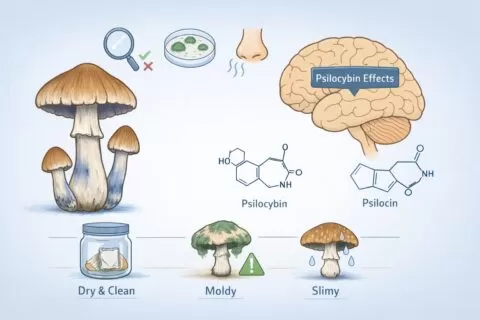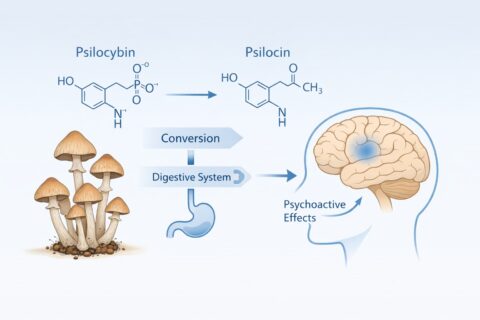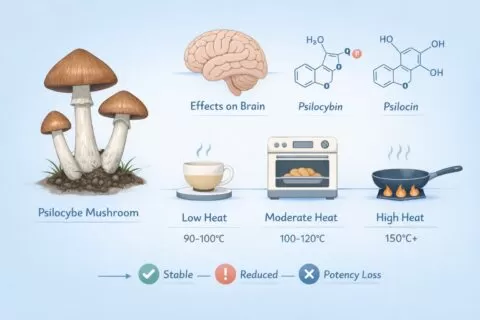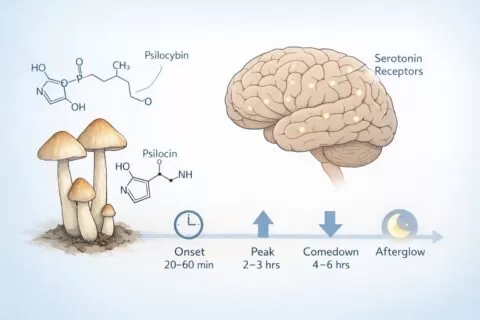
Dried mushrooms that contain psilocybin change a lot in appearance from their fresh form. Many people call them magic mushrooms or shrooms. Once dried, they shrink, change color, and become brittle.
Even though they look different, they still keep some features that help people understand what they are. Learning about their appearance is useful for education, research, or understanding how they are used in scientific studies.
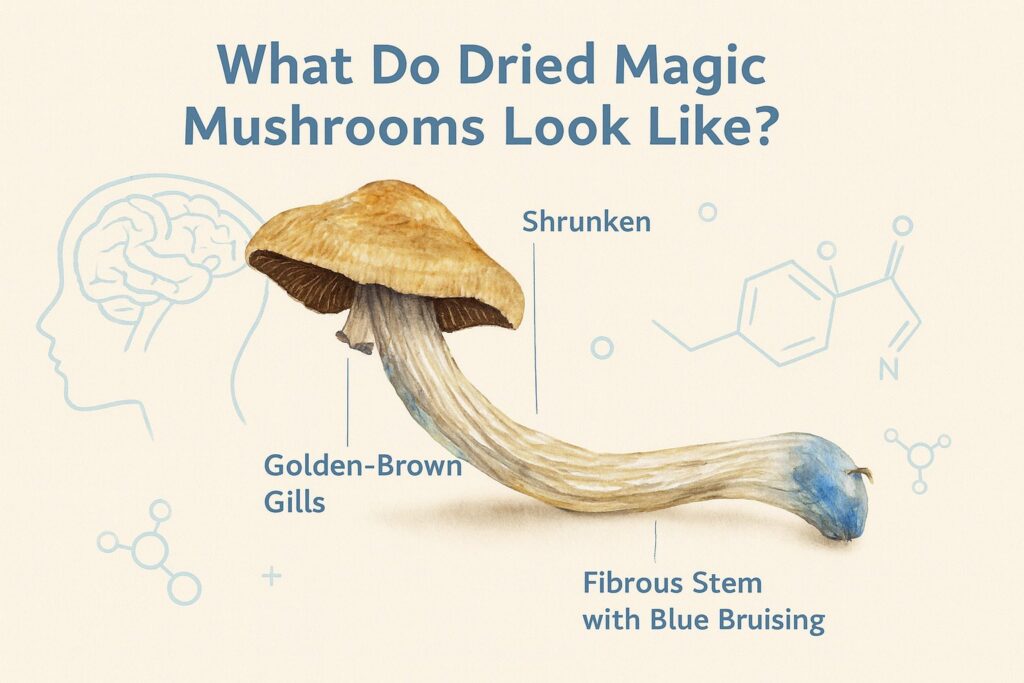
Fresh mushrooms are soft, moist, and full of water. When they are dried, almost all of the moisture is removed. This causes them to shrink and take on a different look and texture. The drying process can remove more than 90 percent of the mushroom’s water. Because of this, their size becomes much smaller, and their surface looks wrinkled.
When fresh, mushrooms may be light brown, golden, or even slightly yellow. But once dried, their color turns darker and duller. The drying process also affects the stem and cap differently. The cap usually changes the most and becomes bent or curled. The stem becomes thin and stringy instead of firm and smooth.
Color is one of the biggest clues when looking at dried psilocybin mushrooms. Most dried mushrooms show shades of brown, gold, or rust. Their colors can range from light tan to dark caramel. The exact shade depends on the species, where it was grown, and how it was dried.
Color varies from mushroom to mushroom. Certain strains, like Golden Teacher or Blue Meanie, may keep stronger tones. Others may look washed out and wrinkled. Researchers often study these differences to help tell species apart, but appearance alone is rarely enough for true identification.
The texture of a dried mushroom is dry and brittle. When touched, the stem may snap easily. If pressure is applied to the cap, it may crumble. This is normal and happens because all the water inside has evaporated.
The mushroom may look older than it is, simply because drying makes it appear worn. It can also look somewhat fragile, like it might fall apart if handled too much.
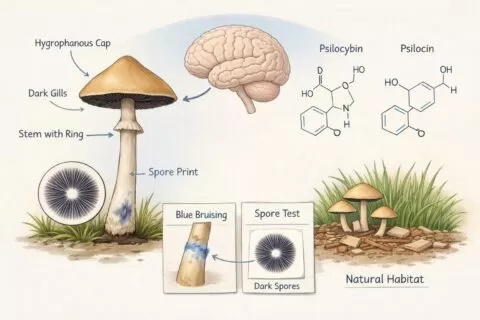
Even after drying, several features can still be seen. These include the cap, the stem, and the gills underneath the cap.
The cap is the top portion of the mushroom. After drying, its shape is often bent or twisted. In species like Psilocybe cubensis, the cap was round when fresh but may look uneven or curled once dried. Some species, like Psilocybe semilanceata, have a noticeable point at the top. That point may still be visible, but smaller.
The stem becomes thin and dry. It may appear stretched out or string-like. Some mushrooms have a small ring or flap on the upper part of the stem. This is called an annulus and is a leftover part of the mushroom’s veil when fresh. After drying, it might look torn or faded, but it can still be seen.
Under the cap, you can find the gills. They are usually dark brown, purple-brown, or nearly black in dried mushrooms. Gills tend to be closely packed together and often attach directly to the stem. Even in a dried form, the dark color of the gills is one of the most helpful visual clues.
One of the most unique features of psilocybin mushrooms is blue bruising. This is a change in color that happens when the mushroom reacts to oxygen. It usually occurs during handling, cutting, or drying.
When dried, the blue color becomes darker and easier to see. It may look like dark blue, blue-black, or even greenish patches. While many psilocybin-containing mushrooms show this bluish tint, it is not a perfect way to identify them. Some varieties bruise less than others, and some poisonous mushrooms can also look similar in certain ways.
Dried mushrooms do not always remain whole. In scientific or controlled settings, the material may be processed further.
In all of these forms, the original mushroom is completely hidden and cannot be confirmed without testing.
A serious challenge with dried mushrooms is that many dangerous mushrooms can look similar. Some species from the Galerina or Cortinarius families are toxic and can cause harm. This makes visual identification risky. Drying makes these differences even harder to see since many features become faded or distorted.
Scientists and researchers often warn that visual checks are not enough. Correct identification usually requires expert knowledge, microscopy, or lab testing. Mistaking one mushroom for another can lead to serious health problems.
Dried psilocybin mushrooms usually appear small, brittle, and wrinkled. They often turn rusty-brown with lighter stems and may show dark blue or blue-green patches. The gills under the cap are usually dark brown or black, and the stem may contain a thin ring from its fresh form.
While these traits help describe what dried mushrooms look like, they are not enough for safe identification. Many other mushrooms can appear similar. That is why visual appearance alone is not considered reliable or safe for identifying dried mushrooms in real-world situations.