Magic mushrooms are known by many different names. Some people call them “shrooms,” while others use scientific terms like Psilocybe cubensis.
Hundreds of years ago, Indigenous cultures in what is now Mexico had their own name: teonanácatl, which means “flesh of the gods.” These mushrooms were used in sacred rituals and held deep spiritual meaning. Today, they’re studied more closely in science and mental health research, and their cultural and historical importance is being recognized again.
So, what are magic mushrooms really called? In this article, we’ll look at the different names they go by, from formal scientific terms to street names, cultural labels, and even some common misunderstandings.
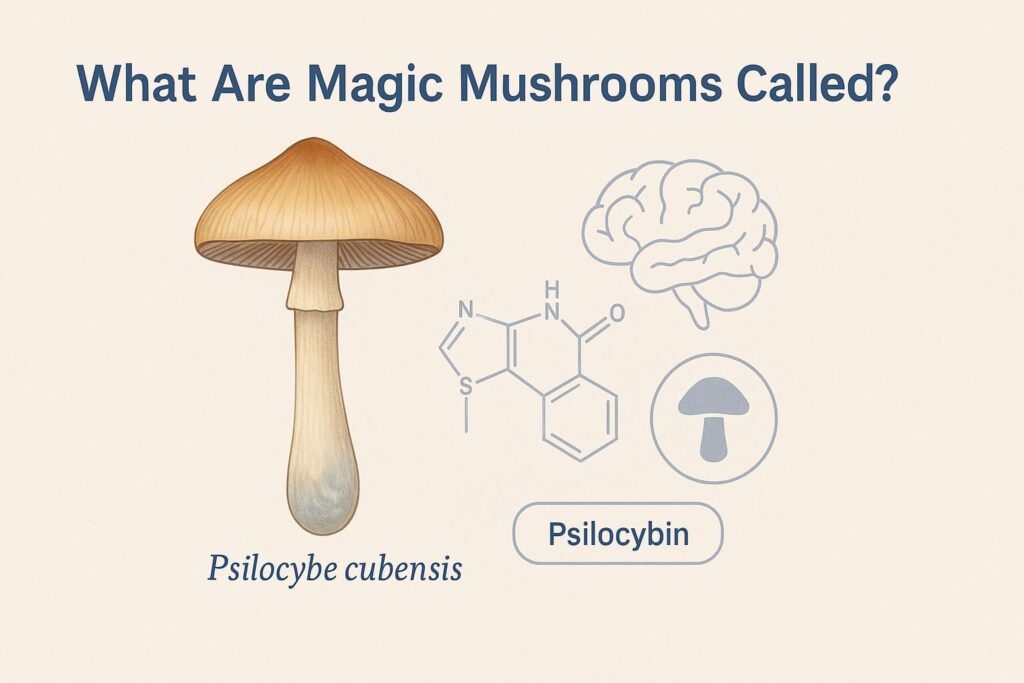
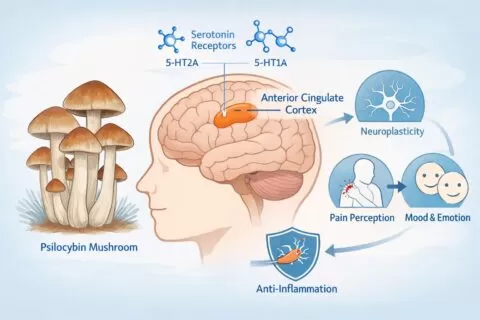
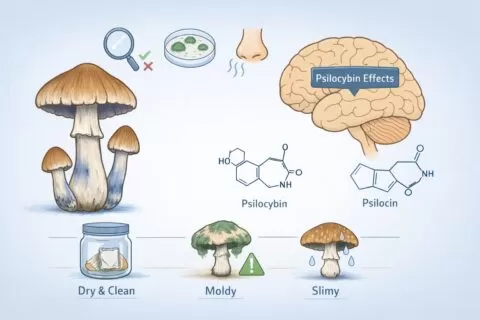
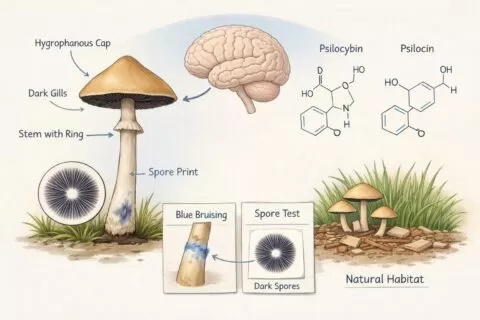
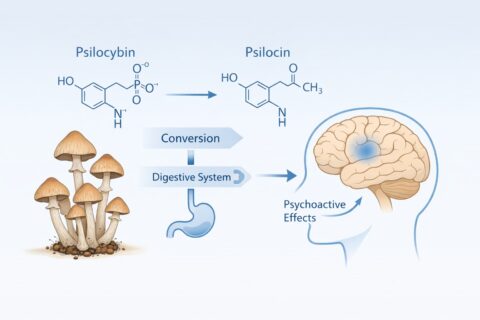
Magic mushrooms are part of a larger group of living things called fungi. The main chemical that makes these mushrooms special is psilocybin. Once it’s in the body, psilocybin changes into psilocin, which affects how people see, think, and feel.
Most magic mushrooms belong to a group called Psilocybe (say: sil-oh-suh-bee), but there are other types too, like Panaeolus, Gymnopilus, Inocybe, Pluteus, and Conocybe. Scientists classify them under:
So, the technical term for a magic mushroom is a fungus that contains psilocybin and psilocin, natural substances that affect the brain.
Besides scientific names, there are many everyday terms for these mushrooms. Some are based on how they look, others on how they’re used. Here are some of the most common names:
Some people even use the word Amanitas, though that’s not accurate. Amanita muscaria (the red mushroom with white dots) is not a psilocybin mushroom; it contains different chemicals and works very differently.
Centuries ago, in parts of Central America, mushrooms containing psilocybin held deep spiritual value. Among the Aztecs, they were called teonanácatl, which roughly means “flesh of the gods.” These mushrooms played a role in religious and healing ceremonies, where they were believed to open a connection to the spiritual world. Because of this, they’re sometimes referred to as sacred mushrooms in historical or cultural contexts.
There are more than 180 types of mushrooms that contain psilocybin. But some are more famous than others because they’re stronger or easier to find. Here are a few you might hear about:
| Species Name | Nickname | What Makes It Special |
| Psilocybe cubensis | Cubes, Gold Tops | The most well-known kind. Easy to grow. Has a golden cap. |
| Psilocybe semilanceata | Liberty Caps | Grows in fields, often in Europe and North America. Has a pointy top. Very strong. |
| Psilocybe cyanescens | Wavy Caps | Found on wood chips. Wavy edges on the cap. Very potent. |
| Psilocybe azurescens | Flying Saucers, Azes | Grows near the coast in Oregon. Extremely strong. |
One thing many of these mushrooms have in common is something called blueing. When the stems are bruised, they turn blue. This is often a sign that the mushroom contains psilocin, though not always.
This part is important. Not all mushrooms that look unusual are magic mushrooms. In fact, some mushrooms that look similar can be very dangerous, even deadly.
For example, Galerina marginata looks like a psilocybin mushroom but is highly toxic. Eating it can cause serious liver damage or death. That’s why it’s never safe to eat a wild mushroom unless it’s been correctly identified by an expert.
Also, some people confuse magic mushrooms with Amanita muscaria (the red mushroom with white spots). This mushroom doesn’t contain psilocybin. It has chemicals called muscimol and ibotenic acid, which act very differently in the body. Another type of fungus called Claviceps purpurea (or ergot) doesn’t contain psilocybin either, but it’s known for being used in the early creation of LSD.
So, just because a mushroom is called “magic” doesn’t mean it’s safe, or even the kind of mushroom people are talking about when they say “shrooms.”
Magic mushrooms go by many names, but their most correct scientific name is psilocybin mushrooms, mostly from the Psilocybe group. The most common everyday names are magic mushrooms and shrooms.
As scientists continue to study psilocybin for its possible uses in mental health therapy, interest in these mushrooms is growing again. At the same time, ancient names like teonanácatl are being remembered and respected for the role these mushrooms played in spiritual ceremonies long ago.
Magic mushrooms are part science, part history, and part mystery. No matter what you call them, it’s important to know what they are and what they’re not.