Magic mushrooms, like any natural product, can spoil over time if they aren’t stored properly. If you use or store mushrooms in any form, knowing when they’re no longer safe is very important. Spoiled mushrooms can lead to serious health issues, including food poisoning or mold-related illness. Here are the top ways to tell if magic mushrooms have gone bad.
What They Look Like: Visual Clues
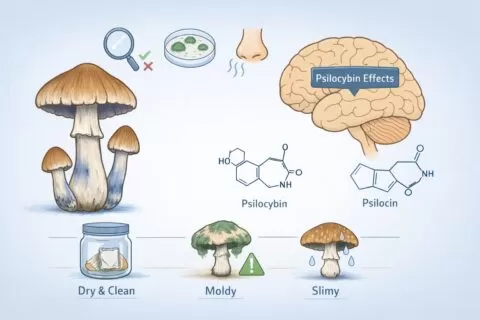
The first way to tell if mushrooms are bad is by looking at them. There are good signs and bad signs, and it’s important to know the difference.
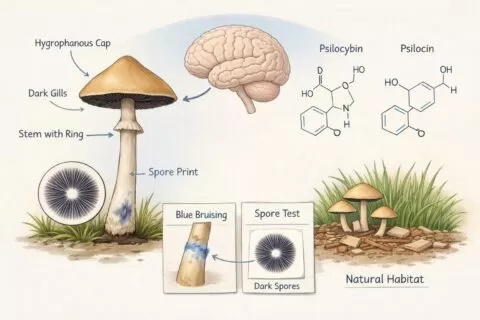
- Blue Bruising Is Normal: If your mushroom has a bluish or purplish tint where it has been touched, that’s okay. This is called bruising. It happens when the psilocybin reacts with oxygen. It doesn’t mean the mushroom is bad.
- White Fuzz or Webbing Means Trouble: If you see white fuzz growing on the mushroom, especially if it looks like spider webs, it could be mold. This is not the same as normal fuzz from drying. Real mold often has a cobweb-like look.
- Bright or Dark-Colored Spots: Green, black, or orange patches are a bad sign. These are the colors of common mold. If you see these, do not use the mushroom.
- Slime or Shine: Mushrooms should never be wet or slimy. This means bacteria are breaking them down. If it feels slippery or looks shiny, throw it away.
What They Smell Like: The Sniff Test
Smell is another way to check if mushrooms are safe.
- Good Smells: Dried mushrooms should smell earthy, woody, or a little bit like crackers or dry tea.
- Bad Smells: If the mushroom smells sweet, sour, like ammonia, or like a gym bag, it’s no good. These smells mean bacteria or mold are growing on it.
- Musty Smells: If it smells like a damp basement or old books, that’s another mold warning sign.
What They Feel Like: The Snap Test
Feel the mushroom. The way it breaks or bends says a lot about its condition.
- Dry and Snappy Is Good: Dried mushrooms should break with a snap, like a cracker. This means they are properly dried and stored.
- Bendy or Leathery Is Bad: If the mushroom bends without snapping, it still has moisture inside. This is risky because moisture helps mold grow.
- Soft or Mushy: A soft texture is another sign of spoilage. It may have pulled in moisture from the air or been stored badly.
Potency vs. Spoilage: What’s the Difference?
Not all old mushrooms are unsafe. Some may lose strength over time but are not dangerous.
- Weakened but Safe: A mushroom that is two years old but stored in a dry, dark, and airtight place might be weaker but still safe to touch.
- Fresh but Dangerous: A mushroom that’s only two weeks old but was kept in a damp plastic bag could be dangerous. Mold and bacteria grow fast in moist places.
Old doesn’t always mean bad. Wet or moldy always does.
Quick Chart: Safe or Not Safe?
| Feature |
Safe to Use |
Throw It Out Immediately |
| Color |
Blue bruising, earthy browns |
Green, black, orange, fuzzy white |
| Texture |
Dry and crisp, snaps easily |
Slimy, soft, leathery, or bendy |
| Smell |
Earthy, woody, like crackers |
Sour, ammonia, musty, rotten |
| Gills (underside) |
Dark brown or black, intact |
Covered in fuzz or soaked |
How to Store Magic Mushrooms the Right Way
The best way to keep mushrooms safe is to stop them from going bad in the first place. Here’s how to store them:
- No Heat: Keep mushrooms away from hot spots, like near ovens or sunny windows.
- No Light: Store them in a dark place, like a cabinet or drawer.
- No Moisture: Use an airtight glass jar, like a Mason jar. Avoid plastic bags, which can let in air and moisture.
- No Oxygen: Add a food-safe silica gel packet in the jar. It helps keep everything dry.
A cool, dark, and dry spot is the best place to store mushrooms.
Avoid the freezer. While it’s cold and dark, taking mushrooms in and out can cause condensation. This leads to moisture, which leads to mold.
Final Rule: If You’re Not Sure, Toss It
The golden rule is simple: When in doubt, throw it out. If a mushroom looks, smells, or feels wrong, don’t take a risk. Some molds can cause serious illness. No experience is worth your health.