Magic mushrooms have become a major topic of interest as scientific research continues to grow. Some clinical trials suggest that a single, supervised dose of psilocybin may help people with certain mental‑health conditions. At the same time, many people are curious about how dosing works and what safe use might look like. Because psilocybin is a strong substance, it’s important to understand dose levels, timing, and risks.
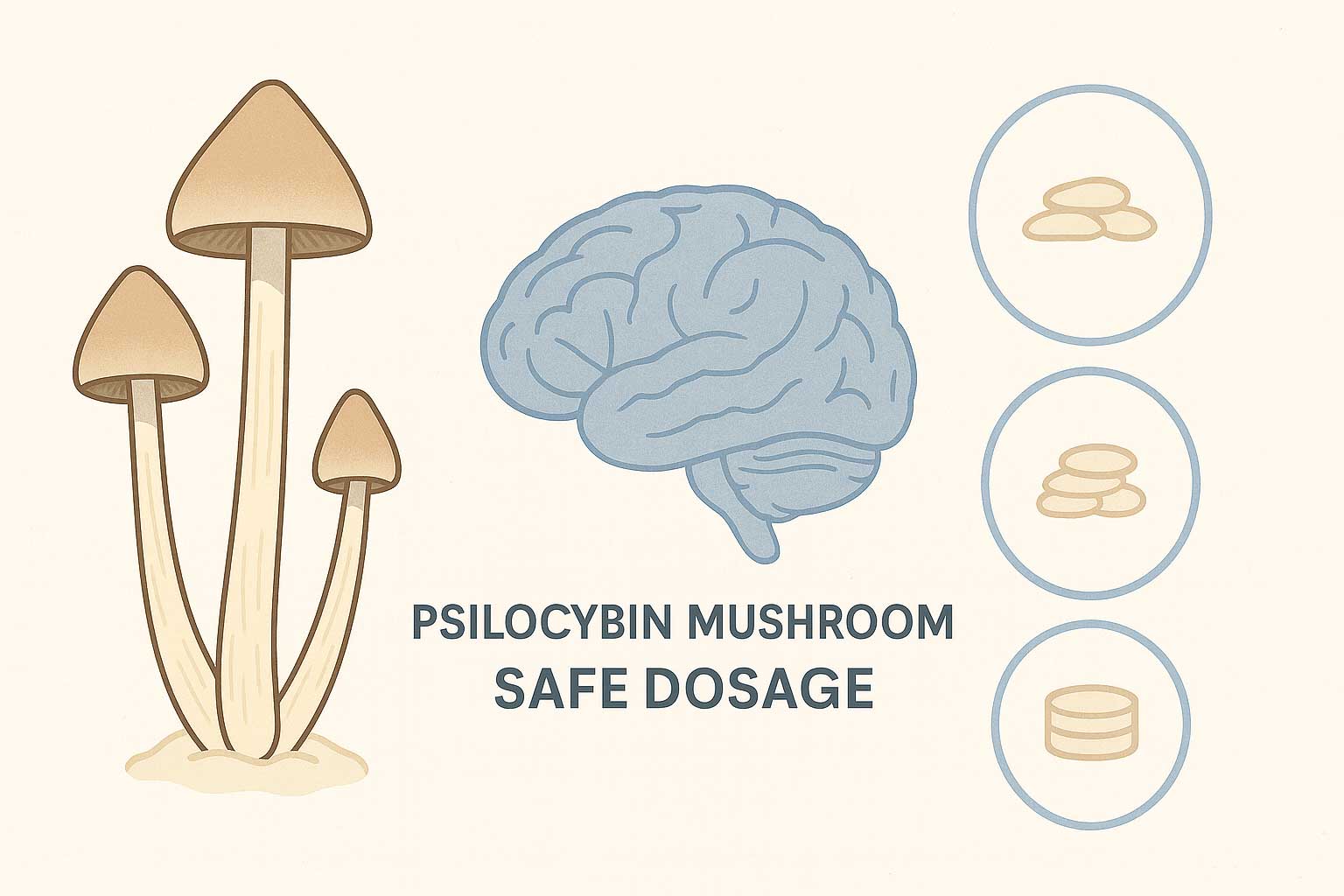
Knowing how much is considered “safe” is complicated because the strength of natural mushrooms changes a lot. Mushroom strain, growing conditions, and even the part of the mushroom used can affect potency. Most doses are measured in grams of dried Psilocybe cubensis, but even this can vary. Clinical studies use pure psilocybin measured in milligrams, which gives researchers more control.
Experts often use general categories to describe dose ranges. A microdose is usually 0.1 to 0.5 grams of dried mushrooms and does not cause hallucinations. People often say it improves focus or mood.
A low dose, 0.5 to 1.5 grams, may create mild sensory changes or shifts in emotion. A medium dose, 1.5 to 3.5 grams, can lead to classic psychedelic effects like visuals or changes in time perception. High doses above 3.5 grams can be intense and may feel overwhelming for some. Anything above 5 grams is sometimes called a “heroic dose.” This level can cause very strong experiences that may be difficult to manage without preparation.
In research settings, dosing is more controlled. A 10‑milligram dose of pure psilocybin is considered low, while 25 milligrams is used in many modern clinical trials. These studies typically use one dose with trained staff supervising. Early findings show no major short‑term or long‑term harm from a single controlled dose. Still, this does not mean repeated or unsupervised use is safe.
How often someone takes magic mushrooms matters as much as the dose itself. Psilocybin creates a rapid tolerance, which means that the effects drop sharply if someone uses it again too soon. After a moderate or high dose, the brain may take days or weeks to respond the same way. Most experts say to wait at least one to two weeks between larger doses. Some recommend spacing them even farther apart to allow time for reflection and for the brain to fully reset.
Microdosing works differently because the doses are small. People who microdose often follow schedules designed to avoid tolerance.
One common schedule uses one day on and two days off. Another uses five days on and two days off. These schedules aim to prevent the brain from adapting too quickly. Still, researchers don’t yet know the long‑term effects of regular microdosing, and more studies are needed.
Psilocybin has several risks that can appear during or after use. In the moment, high doses can cause fear, confusion, or a “bad trip,” especially in stressful or unsafe environments.
Physical side effects may include nausea, vomiting, a fast heartbeat, or higher blood pressure. People with heart problems may be at higher risk. Foraging for wild mushrooms can also be dangerous, because some poisonous varieties look nearly identical to psilocybin‑containing mushrooms.
There are also long‑term risks to consider. People with a personal or family history of schizophrenia or psychosis may face a higher chance of negative mental‑health effects. Psilocybin is not considered physically addictive, but some people may become dependent on the emotional changes it creates.
A rare condition called Hallucinogen Persisting Perception Disorder, or HPPD, can cause lasting visual problems, like halos or trails, long after the substance is gone. Extremely dangerous complications have also been reported when people attempt to inject mushroom extracts.
People who choose to use psilocybin in places where it may be legal under certain conditions often follow harm‑reduction steps. One important guideline is starting with a low dose and slowly increasing only if needed. Using a digital scale helps avoid taking too much by accident.
Many users also pay close attention to “set and setting,” meaning their mindset and environment. A calm space and a positive mood may reduce difficult experiences. Some people have a sober, trusted sitter nearby during higher doses to help them stay grounded. It’s also important to avoid mixing psilocybin with alcohol or other substances because this can produce unsafe or unpredictable effects.
The safest approach depends on why someone is taking magic mushrooms and how often they take them. Clinical research supports long breaks between full psychedelic doses. Microdosing schedules build in days off to help prevent tolerance, but researchers still need more information about long‑term safety.
No matter the dose or schedule, safe preparation, awareness of risks, and understanding local laws are essential. Psilocybin is a powerful compound, and learning about it requires care and respect.