Microdosing has become a popular topic for people curious about mushrooms. But what exactly is a microdose, and how much does that mean when it comes to magic mushrooms?
In simple terms, a microdose is a very small amount of a psychedelic substance. It’s not enough to make you hallucinate or “trip.” The idea is to take just enough to possibly improve focus, mood, or creativity, without changing how you see or feel the world in any major way.
A microdose is usually between 1/10th and 1/20th of a full psychedelic dose. People often call this the “10% rule.” It’s meant to be sub-perceptual, which means you may feel a slight shift in energy, but you’re still completely able to work, drive, or socialize.
Think of it like adding just a pinch of spice to your food. It’s not meant to overwhelm, just to give a small, helpful nudge.
Most people who microdose use dried Psilocybe cubensis mushrooms. This is one of the most common types of magic mushrooms. The dried version is used because it’s easier to weigh and store.
Here’s a general guide to microdosing amounts:
| Dose Level | Amount (Dried Mushrooms) | What to Expect |
| Low Microdose | 0.05g – 0.1g | Very mild. A good starting point. |
| Standard Microdose | 0.1g – 0.2g | The “sweet spot” for many users. |
| High Microdose | 0.2g – 0.3g | Might feel a little fuzzy or floaty. |
| Threshold Dose | 0.5g or more | Not a microdose. May cause light effects. |
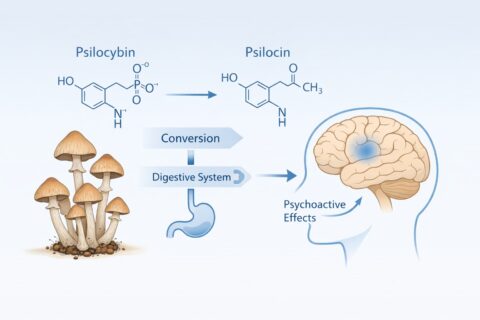
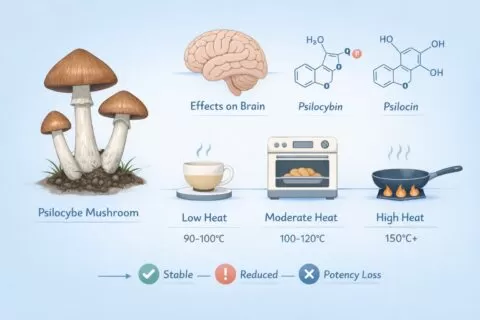
A key point to understand: magic mushrooms contain psilocybin, the active compound. On average, dried mushrooms are about 1% psilocybin by weight. So if you take 0.1 grams of dried mushrooms, that’s roughly 1 milligram of psilocybin.
In research labs, a microdose of pure psilocybin is often measured at 1 to 3 milligrams. Since we’re talking about mushrooms in their natural form, users need to go by weight because each mushroom has a slightly different strength.
People don’t usually microdose every day. That’s because the body can quickly build tolerance, meaning the effects get weaker over time. To avoid this, there are different schedules people follow.
This is a beginner-friendly plan created by researcher Dr. James Fadiman.
Many people like this method because it’s easy to remember and keeps the experience mild and manageable.
This is a more advanced option named after mycologist Paul Stamets.
Some believe that adding Lion’s Mane helps brain health and that Niacin helps the body absorb the ingredients. This method is more intense, so it’s usually used by experienced users.
Getting the dose right is extremely important. Even small changes in weight can make a big difference in how someone feels.
Here are common steps people use to measure accurately:
Even a small mistake in measurement can make the difference between a helpful microdose and an overwhelming experience, so accuracy matters a lot.
While microdosing is not fully approved by health authorities, many users share personal experiences about its effects. Here are some commonly reported benefits:
It’s important to note that these effects are not guaranteed. Some people don’t feel anything, while others feel a big change. And science is still trying to figure out exactly how and why these effects happen.
Just like with anything that affects the brain, there are risks.
Always check your local laws, especially if you’re reading from the United States or Canada. Legal status can vary from state to state or province to province.
Some studies, like those from Imperial College London, suggest that microdosing might work mainly because people believe it will help. This is called the placebo effect. Interestingly, people in these studies still reported feeling better, even if the mushroom dose was fake.
That doesn’t mean their experiences weren’t real. It just means our minds are powerful. When people track their mood, energy, and thoughts over time, often in a journal, they often find interesting patterns, whether the dose was strong or not.
If someone is curious about microdosing for personal research or wellness:
Microdosing is a personal and often quiet experience. It’s not about “tripping” or seeing wild colors. It’s about tiny amounts, taken carefully, sometimes as part of a routine, with the hope of feeling just a little bit better, more calm, more focused, or more alive.
That said, there’s still a lot to learn. Science is still catching up, and legal rules are still strict in most places. If this is something you’re interested in learning more about, stick to trusted information, be cautious, and always know the law in your area.
Magic mushrooms, especially in microdoses, are being studied more and more by researchers and wellness communities alike. But until more is known, it’s smart to treat them with respect and a healthy sense of curiosity, not risk.

Are You 18 Or Over?
By clicking 'Continue', you confirm that you are over 18 years old. By using this website, you agree to our terms of service.