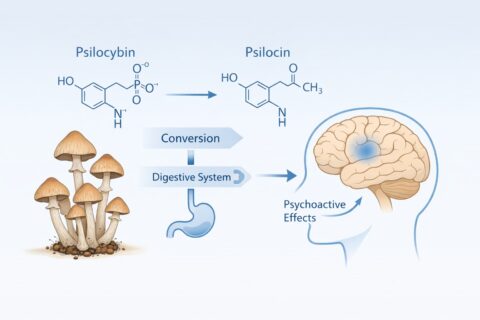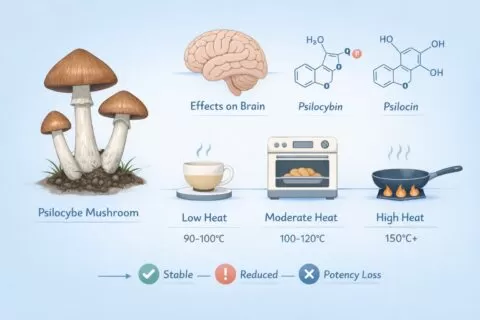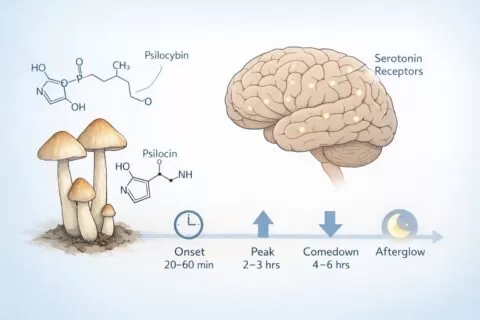
Magic mushrooms contain a compound called psilocybin. After ingestion, the body changes psilocybin into another chemical called psilocin, which interacts with the brain and may cause changes in perception, mood, and senses. This change does not happen right away. The body needs time to digest the mushroom and convert the compound, which is why the effects are delayed.

Most people who consume dried or raw magic mushrooms may begin noticing effects within 30 to 90 minutes. However, timing can vary. Studies and clinical observations suggest that the method of ingestion plays a major role in how fast the effects begin.
| Method of Ingestion | Approximate Onset Time |
| Mushroom tea or liquid extract | 5–15 minutes |
| Dried or raw mushrooms | 20–40 minutes |
| Capsules or mixed edibles | 30–90 minutes |
The way magic mushrooms are taken can have a big impact on how quickly their effects start. When mushrooms are brewed into a tea or made into a liquid extract, the active compounds begin absorbing into the bloodstream almost immediately through the stomach lining, which explains the fast 5 to 15 minute onset.
Eating dried or raw mushrooms requires the body to first digest the mushroom material, so the psilocybin is released more slowly, typically within 20 to 40 minutes. Capsules and edibles, like chocolates or gummies, take even longer because the body must break down other ingredients before accessing the psilocybin, which can delay onset to anywhere from 30 to 90 minutes. These differences show how important preparation and format are in how quickly effects may be felt.
Researchers have found that the general experience tends to follow a timeline. This may vary widely from person to person.
| Phase | Time After Ingestion | What Typically Happens |
| Onset | 20–60 minutes | Subtle changes in mood or senses |
| Peak | 1–3 hours | Strongest effects reported |
| Plateau | 3–6 hours | Effects begin to decrease |
| After-effects | 6–12+ hours | Mild mood changes or fatigue |
In clinical and observational studies, psilocybin’s effects tend to follow a distinct timeline, though individual experiences may vary based on factors like dose, body chemistry, and mindset. During the onset phase, usually 20 to 60 minutes after ingestion, people may feel gentle shifts in mood or perception, such as enhanced colors or mild nausea.
The peak phase, typically between 1 to 3 hours, is when the most intense effects occur. This can include altered thought patterns, visual distortions, and a changed sense of time. As the experience transitions into the plateau phase (3 to 6 hours), these effects begin to settle, often leaving the user in a reflective or introspective state.
Finally, after-effects can last from 6 to 12 hours or more, often described as an emotional or physical “afterglow,” with some feeling relaxed while others may feel mentally tired. These stages help researchers understand and monitor the effects of psilocybin in clinical settings.
Several things impact how fast psilocybin turns into psilocin in the body.
The effects of psilocybin don’t always appear quickly. If someone takes more too soon because they think “nothing is happening,” both doses could activate at once. This could make the experience stronger or harder to manage. Many experts recommend waiting at least 1.5 to 2 hours before considering any additional intake.
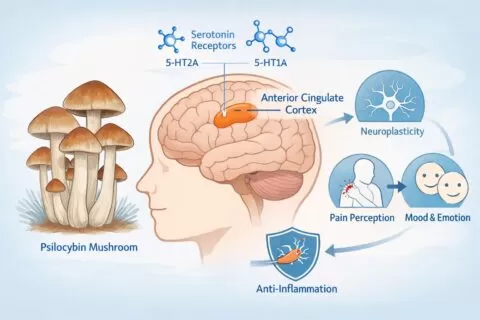
The delayed onset comes from how the body processes the substance. First, the digestive system breaks down the mushroom. Then, enzymes in the liver and gut convert psilocybin into psilocin, which is active in the brain. Only after this process does psilocin begin to interact with serotonin receptors, possibly leading to altered perception.
Clinical studies at institutions such as Johns Hopkins University are exploring whether psilocybin could help treat certain mental health conditions. These studies take place under strict rules with medical oversight. Psilocybin is not approved as a medical treatment by the U.S. Food and Drug Administration or Health Canada except in tightly controlled programs or licensed clinical trials.
The time it takes for psilocybin to take effect depends on many variables, from how it’s taken to how each person’s body processes it. Clinical studies continue to explore these timelines in controlled settings to better understand how psilocybin interacts with the brain and body. This ongoing research helps build a clearer picture of its potential effects, risks, and therapeutic possibilities.