Magic mushrooms, also known as “shrooms,” are fungi that contain a natural chemical called psilocybin. When someone takes magic mushrooms, psilocybin affects how their brain works, leading to unusual and often powerful experiences. These experiences are not the same for everyone. They can change depending on how much is taken, how the person feels at the time, and where the experience takes place.
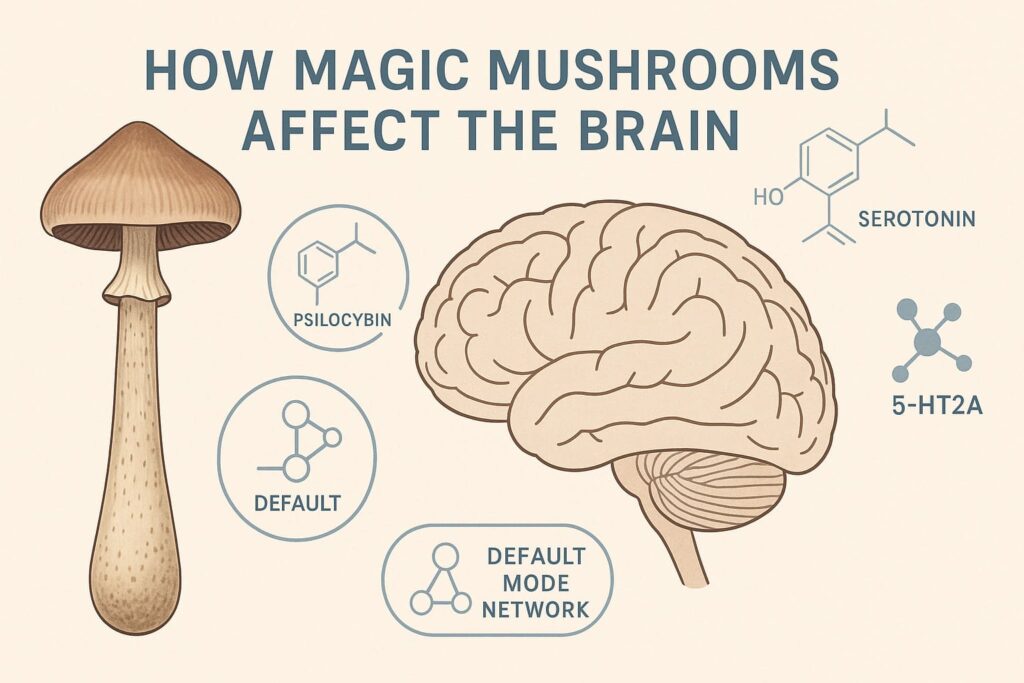
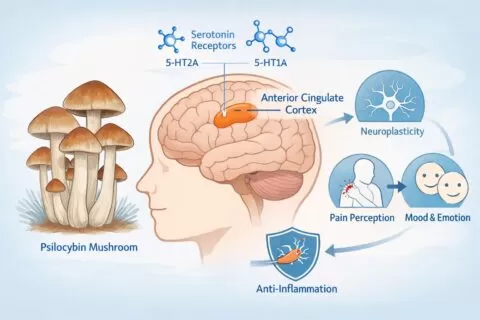
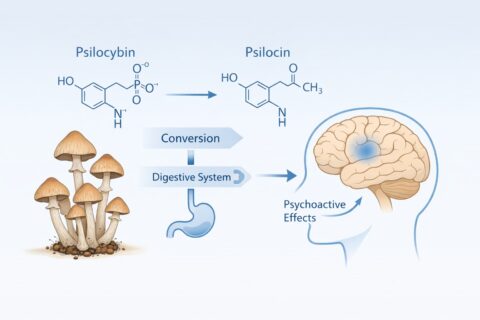
Once inside the body, psilocybin changes into another chemical called psilocin. Psilocin is similar to serotonin, a brain chemical that helps control mood, emotions, and thinking. It attaches to serotonin receptors in the brain, especially one called 5-HT2A. This changes how parts of the brain talk to each other.
One area that is affected is the Default Mode Network (DMN), which deals with thoughts about yourself and your habits. When this network is interrupted, it can lead to major shifts in how someone feels, thinks, and sees the world.
People often describe feelings of joy, wonder, or emotional release. Emotions can feel stronger than usual. Someone might laugh or cry easily. Their senses may feel different, colors look brighter, sounds are more interesting, and they might even “see” music. Time can seem to slow down or speed up.
Many say they feel deeply connected to everything around them. Some describe a peaceful or spiritual feeling, like being part of the universe. In stronger experiences, a person may lose their usual sense of self. This is called ego dissolution.
Not all experiences are pleasant. Some people feel scared, anxious, or out of control. They may feel confused or panicked and have upsetting thoughts. Some see frightening images or feel like they’re stuck in a negative loop. These challenging moments can be very intense and are more likely when someone is in a bad mood, feels unsafe, or takes a high dose.
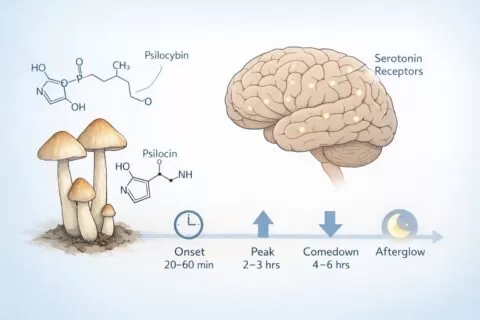
The effects usually begin about 20 to 40 minutes after taking the mushrooms. The strongest part of the experience happens between 60 and 90 minutes in. Most trips last 4 to 6 hours, but some effects, like changes in thinking, can last longer.
Common short-term physical effects include:
The strength of the experience depends on how much psilocybin is taken:
The experience is also shaped by “set” and “setting.” Set means your mindset, your mood, thoughts, and expectations. Setting means the place you are in and the people around you. A calm, safe space with trusted people makes a good experience more likely.
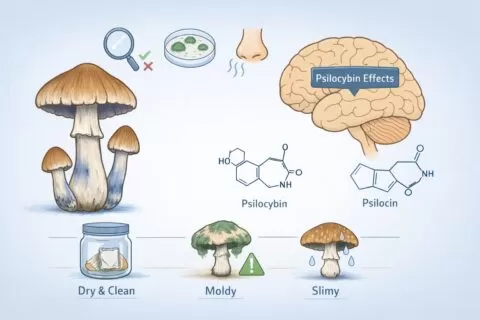
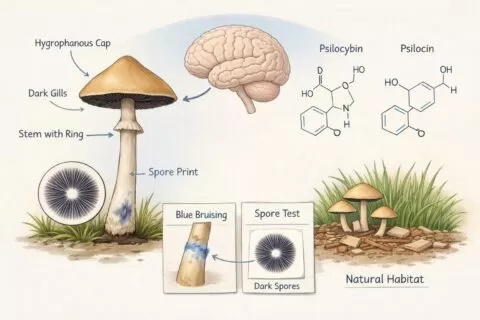
The biggest physical danger comes from eating the wrong kind of mushroom. Some wild mushrooms are poisonous and can cause serious illness or death.
Some people have what’s known as a bad trip. This can include strong fear, sadness, or confusion. During a trip, it can be hard to make safe choices. This could lead to risky behavior or accidents.
People with mental health conditions like schizophrenia, bipolar disorder, or a history of psychosis may be more at risk of negative effects. Psilocybin can make these conditions worse.
There is growing interest in psilocybin’s potential use in therapy. Scientists are studying whether it could help people with serious mental health problems, like depression that hasn’t improved with other treatments. Other areas of research include anxiety, OCD, and addiction to substances like alcohol or nicotine.
These studies are done in safe, controlled environments, usually with medical supervision. Early results are promising, but more research is needed to understand how psilocybin works and who it can help.
Magic mushrooms can change how people think, feel, and see the world, for better or worse. The experience can be joyful and meaningful, or confusing and upsetting. It all depends on the dose, the person, and the environment. Scientists are learning more about psilocybin every year, and future discoveries may lead to new ways to help people who are struggling with mental health challenges.