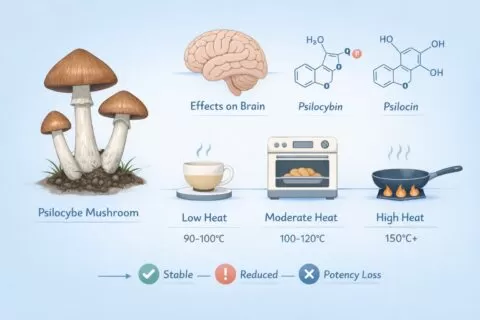
Magic mushrooms, also known as psilocybin mushrooms, are being studied around the world, not just for mental health, but also for their effects on pain. While they are still illegal in most places, research is growing fast. Scientists are exploring how psilocybin, the key compound in these mushrooms, might help with certain kinds of chronic pain. This article breaks down what we know so far, how it works, and what’s still being studied.
Most pain medications, like opioids, work by blocking pain signals from the body. They stop the message before it reaches the brain. Psilocybin works differently. Instead of turning off pain signals, it changes how the brain reacts to them.
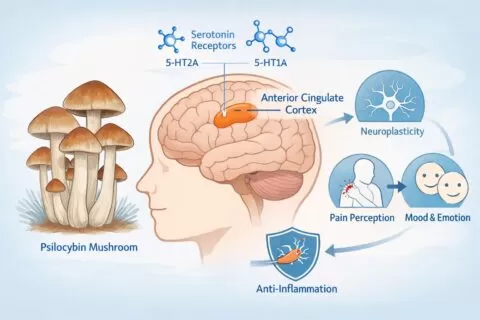
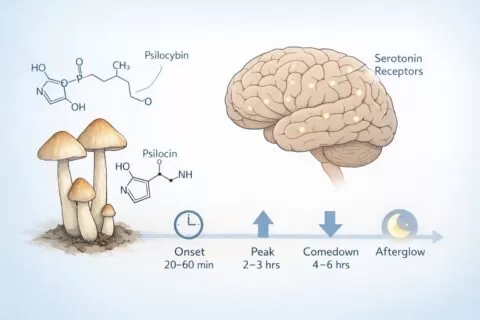
Researchers at Penn Medicine call this the “dimmer switch” effect. Think of it like turning down the brightness on a light rather than flipping it off completely. Psilocybin interacts with special receptors in the brain called serotonin receptors (5-HT2A and 5-HT1A). These receptors help control mood, emotion, and how we process pain.
One part of the brain that psilocybin affects is the anterior cingulate cortex. This area plays a role in both the strength of pain and how upsetting the pain feels. By changing how this brain region works, psilocybin may help people feel pain less intensely or less emotionally overwhelming.
Scientists have also found that psilocybin helps the brain grow new connections. This process is called neuroplasticity. More specifically, it helps grow new dendritic spines and synapses, which are like tiny bridges between brain cells. When someone lives with chronic pain, their brain can get “stuck” in a loop. Psilocybin may help break that loop by building new pathways and helping the brain respond differently to pain over time.
Another key point is the connection between pain and depression. People with chronic pain often feel hopeless, and being depressed can make the pain feel even worse. The best magic mushrooms with psilocybin appear to work on both problems at once, which is one reason scientists are so interested in them.
So far, psilocybin isn’t approved to treat pain, but researchers are running many clinical trials to find out where it could help most. Here are some conditions where psilocybin is being studied:
These are sometimes called “suicide headaches” because the pain is so severe. Some people report major relief from just one or two doses of psilocybin. The results are mostly from small studies and personal stories, but researchers are paying close attention.
Early surveys in 2025 showed that some patients felt up to 75% better after using psilocybin. Scientists are now exploring whether small doses taken regularly (called microdosing) could help prevent migraines before they start.
This is when people feel pain in a limb that’s been removed. It happens because the brain is still sending pain signals to that area, even though it’s no longer there. Some small studies are testing if psilocybin can “reset” how the brain sees the body and stop the pain.
People with terminal cancer often struggle with both physical pain and emotional distress. Psilocybin is being studied to help ease this “existential pain.” Instead of just reducing physical discomfort, it may help people feel more at peace and improve their quality of life.
This condition causes wide-spread pain, fatigue, and other symptoms. It’s hard to treat because the nervous system is overly sensitive. Some early research is looking into whether psilocybin can help “calm down” the nervous system and reduce pain flare-ups.
There are two common ways psilocybin is used in studies:
This means taking a larger dose (usually 20–30 milligrams of pure psilocybin) in a clinical setting with medical supervision. People usually experience a strong psychedelic trip. The goal is a big “reset” of the brain’s pain pathways. This is what most clinical trials are using when they test psilocybin for pain or depression.
This involves taking a very small amount, about 1/10th of a full dose, on a regular schedule. The dose is so low that people don’t feel high or trippy. Some people say it helps with mood, focus, and even pain, but scientists say there’s not enough proof yet to confirm these results. Micro-dosing is being explored, especially in migraine and cluster headache studies.
Even though psilocybin is not considered addictive, it still has risks. It’s important to understand what they are:
As of 2026, there are several clinical trials in progress across top universities. Studies at UCSF and Stanford are testing psilocybin in people with chronic low back pain and nerve pain. Some trials are using advanced brain devices to track what’s happening inside the brain during a psilocybin session. This may help doctors understand how the drug changes the way pain is processed in real time.
These studies are still in early phases (called Phase 1 and Phase 2). That means researchers are checking both safety and basic effectiveness. If the results are positive, it could lead to larger Phase 3 trials and, possibly, future approval for medical use.
Magic mushrooms are gaining attention for more than just their psychedelic effects. When used carefully in clinical settings, psilocybin may offer new hope for people living with hard-to-treat pain. Scientists are discovering that this natural compound doesn’t just block pain, it changes how the brain responds to it. It may also help with the emotional burden of pain, which is often overlooked in regular treatments.
Still, much more research is needed. Psilocybin is not yet an approved medicine for pain, and it carries both mental and legal risks. But if studies continue to show promise, we may one day see a future where mushrooms aren’t just a wellness trend, they’re part of how we treat pain more fully and thoughtfully.

Are You 18 Or Over?
By clicking 'Continue', you confirm that you are over 18 years old. By using this website, you agree to our terms of service.