Have you ever wondered if you could just fall asleep after taking magic mushrooms? Some people wish they could turn off the intense experience and just rest. But here’s the short answer: It’s very hard, and usually not possible, to sleep while on magic mushrooms.
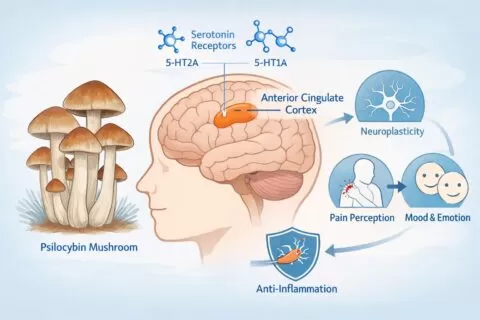
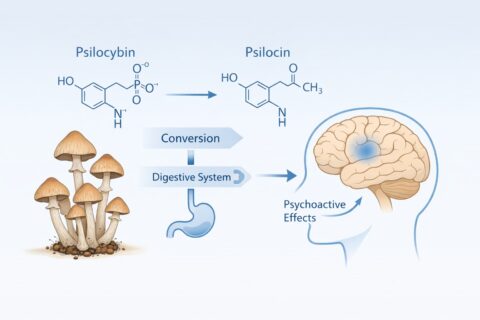
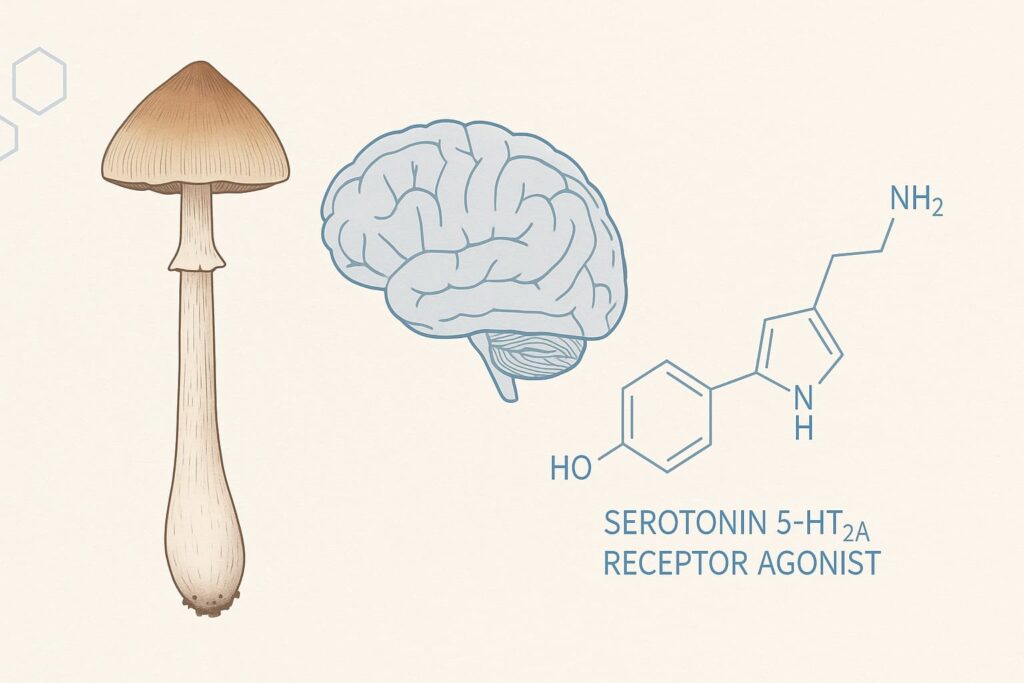
Magic mushrooms contain psilocybin, a natural substance that changes how the brain works. It affects your thoughts, feelings, and senses. Scientists call it a serotonin 5-HT₂A receptor agonist, which means it connects to certain brain parts that deal with awareness and sleep.
Let’s break down why psilocybin keeps you awake and what happens if you try to sleep through it.
Psilocybin makes your brain more active. It connects areas of the brain that don’t normally “talk” to each other. This leads to hyperconnectivity, which can cause strange thoughts, bright colors, and deep emotions. Some people call this being on a “trip.”
It also turns off something called the Default Mode Network (DMN). That’s the part of the brain that helps you feel like “you.” When it shuts down, you might feel like you’ve lost your sense of self. This is the opposite of what your brain needs for sleep, which is calm, quiet, and stable activity.
Some studies even suggest psilocybin blocks REM sleep, the part of the sleep cycle where dreams happen. Since your brain is already creating waking dreams, it doesn’t make room for real ones.
Even if you lie down, your brain is very awake. Here’s why:
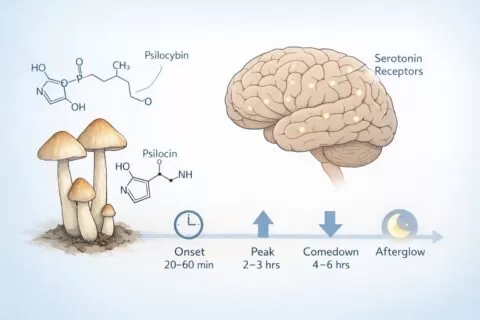
The whole experience usually lasts 4 to 6 hours, and some effects can linger up to 12 hours. Sleep usually only happens at the very end, when your brain starts to settle down again.
Microdosing means taking a very small amount of psilocybin, too little to cause a full trip. A microdose is often between 0.1 and 0.5 grams.
Some people take microdoses during the day for creativity or focus. Others try it at night to see if it helps with sleep or dreams.
Some people say they have more vivid dreams or fall asleep faster. Others say they feel too awake, even with a tiny amount.
Since psilocybin affects people differently, microdosing at night may or may not help with sleep. It’s still being studied and isn’t approved for medical use.
Psilocybin is powerful. It’s not a sleep aid, and trying to use it like one can be risky. Here’s why:
If you’ve taken psilocybin, don’t expect to sleep for at least 6 to 8 hours. Your brain needs time to come back to normal. The best time to sleep is during the comedown, after the trip has peaked and you’re starting to feel calm again.
Trying to fight the experience by forcing sleep doesn’t work and could make things harder. It’s best to let the effects wear off naturally and rest when your mind is ready.
Magic mushrooms are not made for sleep. During a trip, your brain is wide awake and full of activity. Even tiny doses can change your sleep, for better or worse. If you’re curious about sleep, wellness, or brain health, talk to a doctor. New research is happening all the time, but until more is known, respect the science and the law.