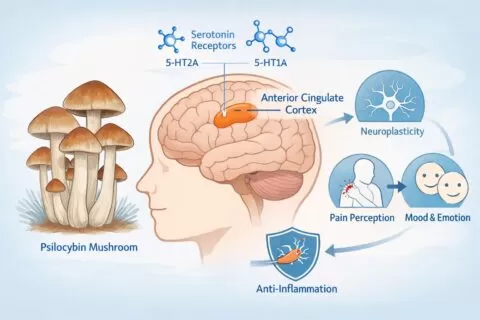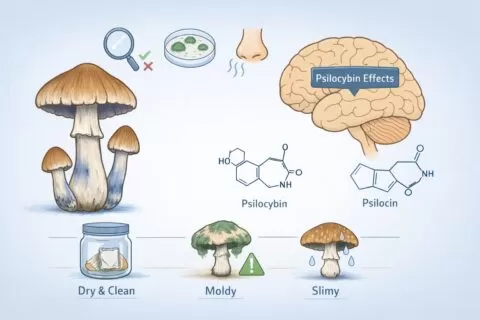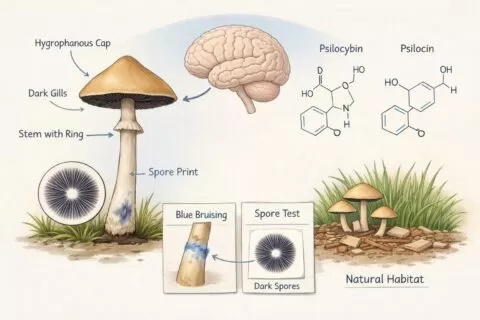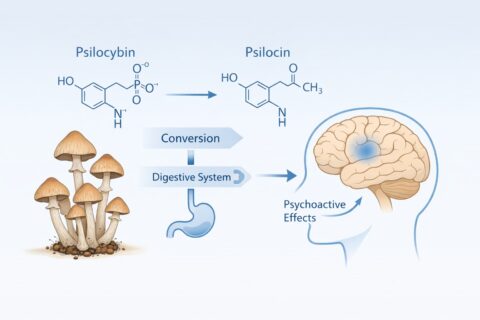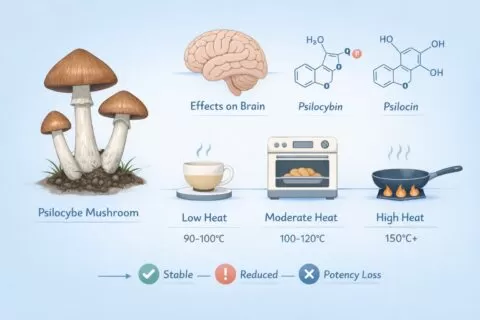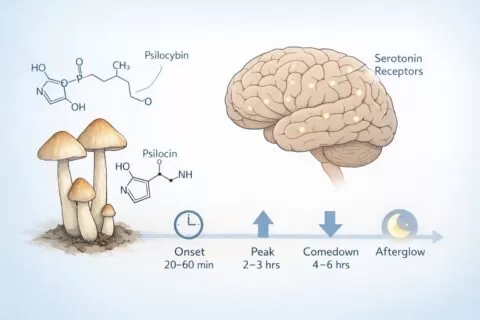
Magic mushrooms get their power from a natural chemical called psilocybin. When someone takes a magic mushroom product, the body turns psilocybin into psilocin, which affects the brain. Psilocin connects to special spots in the brain called 5-HT2A receptors, which are part of the system that handles serotonin, a chemical related to mood, thoughts, and feelings.
But here’s where it gets interesting: if someone uses psilocybin too often, those receptors stop responding the same way. This is called tolerance, and it can happen fast. Let’s break down how psilocybin tolerance works, how long it lasts, and why it matters.
Tolerance means the brain starts to respond less to a substance. With magic mushrooms, this happens when the serotonin receptors get “overstimulated.” When that happens, the brain tries to protect itself by pulling those receptors back, so fewer are available. This is called downregulation. If someone tries to take the same amount of mushrooms again too soon, it won’t feel the same because there are fewer receptors left for the psilocin to affect.
In simple terms, it’s like trying to talk to a room of people where half of them have left. You’re still talking, but fewer people are listening.
Psilocybin tolerance happens almost immediately after a strong dose.
This pattern helps explain why some people space out their experiences, so their brain has time to “reset.”
Yes. Psilocybin shares something called cross-tolerance with other classic psychedelics. These include:
All three substances work by activating the same serotonin receptors. So, if someone took LSD yesterday and tries mushrooms today, they may not feel much. The same is true in reverse.
However, this doesn’t apply to every substance. For example:
Microdosing means taking a very small amount of mushrooms, so small that it doesn’t cause a “trip” or any strong psychedelic effects. People do this for many reasons, usually related to focus or mood, although research is still developing.
Tolerance works differently with microdosing because the dose is low and often spaced out.
One popular method is called the Fadiman Protocol. It involves:
This kind of schedule helps avoid building up too much tolerance. If someone were to microdose every single day, their brain might stop responding over time.
In contrast, macrodosing, taking a large, noticeable amount, builds tolerance very fast. That’s why people who use this method often wait at least 2 weeks between sessions to feel the full effects again.
Even though the biological process is the same, everyone experiences tolerance a little differently. That’s because of several personal factors:
These differences are why it’s hard to predict how someone will react, and why using more just to “feel something” again can be risky.
Sometimes, when someone doesn’t feel the same effect as before, they think the answer is to take more. But that can lead to problems.
Psilocybin affects the brain in powerful ways, and the body naturally adjusts when it’s used. Tolerance is the brain’s way of protecting itself, and that’s important to respect.
Whether someone is learning out of curiosity, research, or simply wants to understand how magic mushrooms interact with the brain, knowing about tolerance is key. It helps explain why some people space out their use, why others say they “lost the magic,” and why taking more isn’t always the answer.
Staying informed is one of the best ways to stay safe and make thoughtful choices, no matter the topic.

Are You 18 Or Over?
By clicking 'Continue', you confirm that you are over 18 years old. By using this website, you agree to our terms of service.