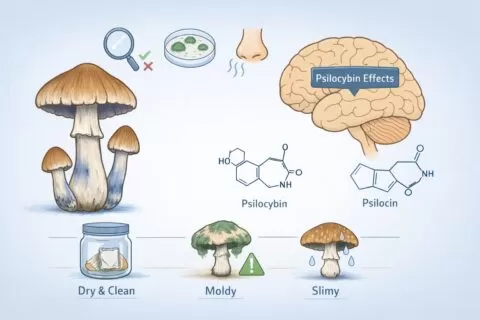
Yes, magic mushrooms can get moldy. Even though they’re often used in dry form, they’re still organic, just like fruit, bread, or cheese. And just like those foods, they can spoil if they’re not dried and stored properly. Whether you’re curious or just want to learn, here’s what you need to know about how mold grows, how to spot it, and why it matters.
Magic mushrooms are a type of fungus called Psilocybe. Like other mushrooms, they’re full of natural moisture when fresh. If that moisture doesn’t get removed, or if it comes back during storage, mold and bacteria can grow fast.
Here are the main reasons mold shows up:
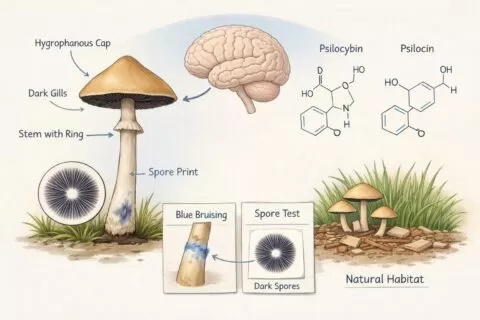
Sometimes magic mushrooms get blue or green spots, and that’s normal. It’s called psilocybin bruising, and it happens when the mushrooms are bumped, cut, or pressed. But mold looks very different and can be dangerous.
Here’s how to tell them apart:
| Feature | Psilocybin Bruising (Safe) | Mold (Not Safe) |
| Color | Blue or blue-green (flat) | White, black, grey, green, or orange (fuzzy or patchy) |
| Texture | Part of the skin; not raised | Fuzzy, slimy, or powdery |
| Smell | Earthy or neutral | Sour, rotten, musty, or like ammonia |
| Touch | Doesn’t rub off | May smear or release dust |
If you’re ever unsure, try the Snap Test. Bend the mushroom stem. If it snaps clean like a cracker, it’s dry. If it bends, it still has moisture, which means mold might already be growing, even if you can’t see it yet.
Not all molds look the same. Here are a few common ones found on spoiled mushrooms:
These aren’t just gross; some are toxic.
Eating spoiled mushrooms isn’t just unpleasant, it can be risky. Here’s what might happen if someone eats moldy magic mushrooms:
This is why appearance and smell matter so much. It’s not worth the risk.
If someone is storing mushrooms for research, analysis, or photography, these steps help prevent mold:
This is the golden rule. You can’t cut the mold off a mushroom the way you might trim a bad spot off cheese or bread. Mold spreads inside the mushroom tissue before you ever see it. Even one fuzzy patch means the rest might be infected, too.
If something looks off, the color, the texture, the smell, it’s safer to toss the whole thing. Mold and mushrooms don’t mix. Whether you’re curious, learning, or just storing them for personal study, know the signs and take care with how they’re kept. It’s always better to be safe than sorry.

Are You 18 Or Over?
By clicking 'Continue', you confirm that you are over 18 years old. By using this website, you agree to our terms of service.