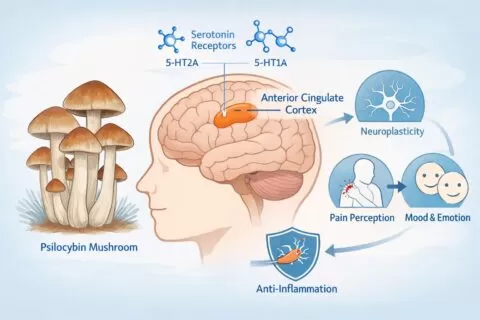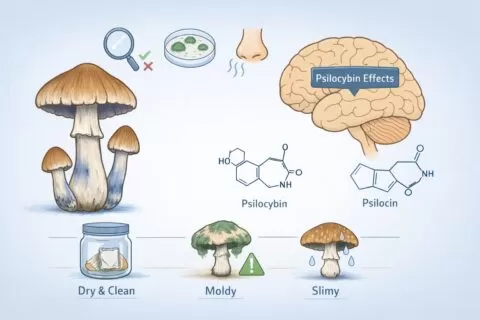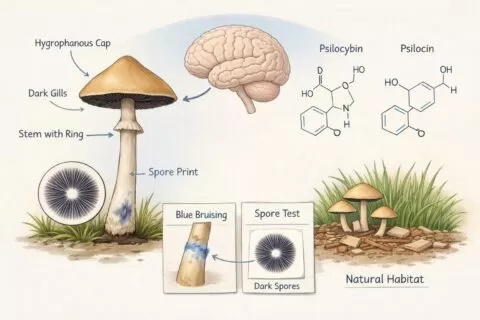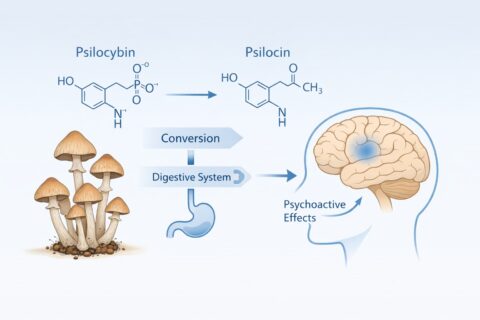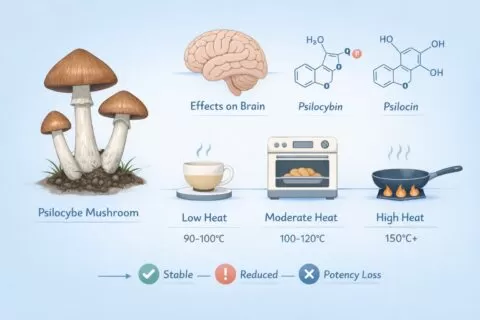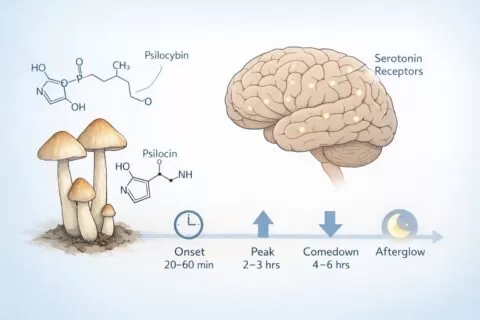
Magic mushrooms are a group of fungi that grow in nature. They’re called “magic” because they contain special compounds, psilocybin and psilocin, that can affect how people think, feel, and experience the world. These mushrooms didn’t come from a lab. They grow naturally in forests, grasslands, and other environments all over the world.
There are over 200 different kinds of magic mushrooms. Most belong to the Psilocybe group, but others are found in families like Panaeolus, Gymnopilus, and Inocybe. Scientists believe these mushrooms have existed for around 65 million years, since the time of the dinosaurs.
One big question scientists ask is: why would a mushroom make a chemical that changes brain activity? The leading idea is that psilocybin helps mushrooms protect themselves. It might confuse or repel insects and small animals that try to eat them. By changing the behavior of these pests, the mushroom has a better chance of surviving and spreading.
Magic mushrooms grow naturally all over the world, except in Antarctica. They can live in many types of environments:
These mushrooms aren’t rare. In the right place, they may even be growing nearby.
Even though magic mushrooms are natural, scientists have also created psilocybin in labs. This is called synthetic psilocybin, and it’s used in medical research and clinical trials.
Here’s how they compare:
The mushroom form can vary from one piece to another, while the lab-made version is consistent.
People have used magic mushrooms for thousands of years. In ancient Mexico, the Aztecs called them teonanácatl, which means “flesh of the gods.” They used mushrooms in ceremonies to pray, heal, and seek visions.
In modern times, traditional healers in Mexico, called curanderos, still use mushrooms for spiritual and medical purposes. They believe mushrooms can help people understand their feelings, find answers, or even improve their health. These cultural practices have been passed down through many generations.
Even though magic mushrooms grow in nature, that doesn’t mean they’re always safe, or legal.
Many magic mushrooms have look-alikes that are toxic or deadly. A mushroom that seems safe could actually be dangerous. Foraging without expert knowledge can lead to serious illness, like seizures.
In many places, psilocybin is still illegal. In the United States, it’s a Schedule I drug at the federal level. That means it’s viewed as having a high risk for misuse and no medical use (according to current law). However, some states and cities have started to change their approach.
For example:
These changes are part of a larger movement to explore “natural medicine” in legal and scientific ways.
So, are magic mushrooms natural? Yes, they grow on their own in the wild, have been around for millions of years, and have played a role in human culture for just as long. But being natural doesn’t always mean they’re safe or legal. These mushrooms are powerful, complex, and still being studied by scientists and health experts today. Whether growing in a forest or studied in a lab, magic mushrooms are a fascinating part of nature, and the conversation around them is just beginning.

Are You 18 Or Over?
By clicking 'Continue', you confirm that you are over 18 years old. By using this website, you agree to our terms of service.